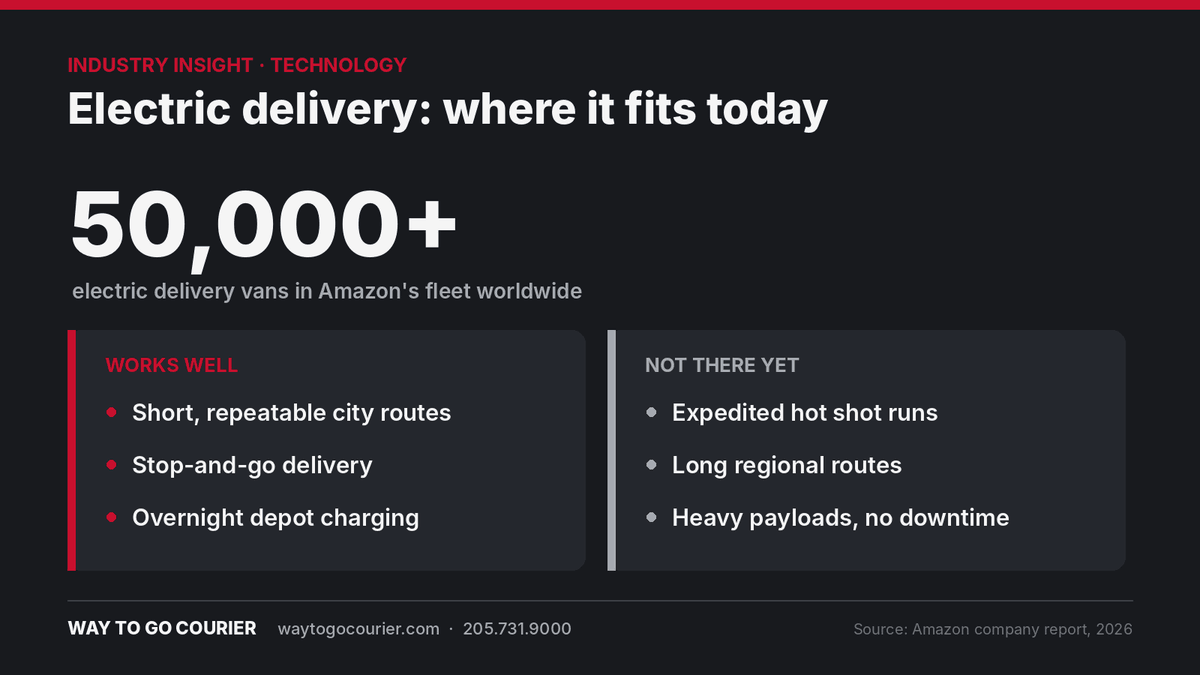
Electric vehicles are no longer a pilot project in logistics. Amazon says it now operates more than 50,000 electric delivery vans worldwide, and Rivian reports more than 40,000 of its vans in Amazon’s service.
But the picture is more mixed than the headlines suggest.
Vans are scaling. Trucks aren’t.
Electric cargo vans make sense on short, predictable, stop-and-go routes where a vehicle returns to the same depot every night to charge. Regenerative braking, fewer moving parts, and lower energy cost per mile help the numbers work.
Heavier trucks and long regional runs are a different story. Battery weight cuts into payload, charging along freight corridors is still thin, and charge time is downtime.
The headwinds are real
- Demand has been uneven. General Motors ended production of its BrightDrop electric delivery van in October 2025, citing market demand.
- Incentives are gone. The federal commercial clean vehicle tax credit (Section 45W) ended for vehicles acquired after September 30, 2025, changing the cost math for many fleets.
- Depot power is a bottleneck. Charging a fleet overnight takes electrical capacity many facilities don’t have without costly upgrades.
- Heat and range. Hot Alabama summers add load to batteries and air conditioning, which cuts into real-world range.
Our take
EVs will keep earning a larger role, especially on dense, repeatable urban routes. For expedited hot shot runs, regional deliveries, and industrial customers who can’t afford downtime, a well-maintained, right-sized conventional fleet is still the dependable choice today.
At Way To Go, we watch this technology closely and will adopt it where it serves our customers, not because it’s a trend. What matters is that your delivery shows up on time, every time.
Questions about your delivery needs? Call 205.731.9000 or request a quote.
Sources: Amazon and Rivian company reports (2026); General Motors announcement, October 2025; One Big Beautiful Bill Act (2025) provisions on Section 45W, as summarized by EY Tax News.